
D.A. Quality Roofing installs spray foam roofing on commercial and industrial buildings in Fort Wayne, Indiana. A coated spray foam roof uses rigid spray polyurethane foam (SPF) applied to a prepared, compatible roofing substrate and covered by a protective weathering coating. The result is a continuous, insulated roof surface with no seams across the field of the roof.
Whether spray foam fits your building depends on the roof underneath it. Before recommending SPF, our family-owned team looks at what is already on the roof, how water moves across it and how you use the building. A recover may be possible when the existing assembly is dry, secure and compatible, with structural capacity and applicable roof-layer limits considered. Where conditions do not permit that approach, the scope needs to address the affected materials or evaluate another system.
How a Spray Foam Roof Works
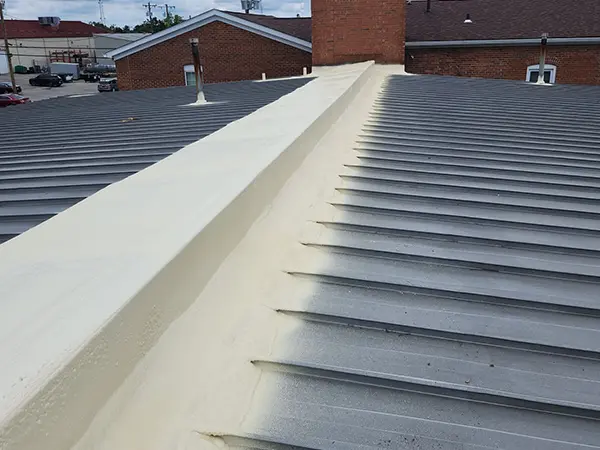
SPF is mixed and sprayed on site. The liquid expands many times its original volume within seconds and cures into a rigid, closed-cell foam that bonds to the surface below. Because it is applied in place, the foam forms one continuous layer across the roof and around properly detailed penetrations, curbs and edges. SPF can form continuous transitions around suitably prepared curbs and roof openings. These details still require the termination, flashing and protective treatment specified for the chosen roof assembly.
The foam also adds insulation above the roof deck. Industry guidance identifies roofing SPF at approximately R-5.5 to R-6.5 per inch. Roof-system guidance commonly describes at least one inch of foam, but the actual minimum, overall thickness, insulation requirements and drainage profile must follow the approved assembly and project design. Greater thickness does not by itself establish energy savings for the building.
Why the Coating Matters
Exposed foam breaks down in sunlight. Ultraviolet light darkens the surface, then makes it brittle until it gradually erodes. That is why the coating is a required part of the system, not an optional finish. Compatible elastomeric coatings, including certain acrylic and silicone formulations, are common options for SPF. Industry guidance generally calls for the base coat on the same day or within 24 hours, subject to the product instructions, surface condition and weather. If you are comparing options, our roof coatings page explains how a coating alone differs from a full spray foam system.
Is Your Fort Wayne Roof a Good Candidate?
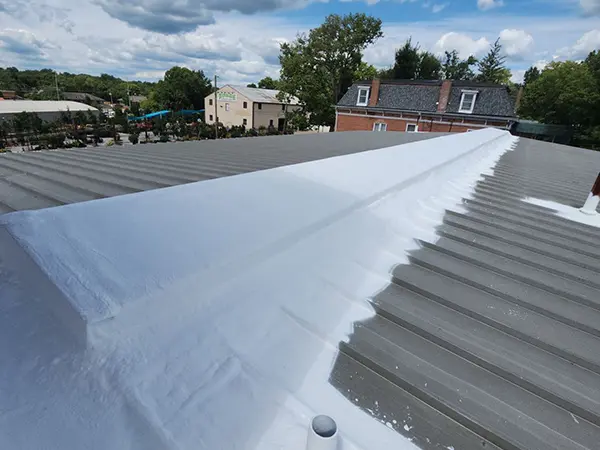
Spray foam is often considered for low-slope commercial roofs, roofs with many penetrations, metal roofs and buildings where removing the existing roof would be costly or disruptive. Suitability is decided on the roof itself. During an evaluation, we look at:
- Moisture: SPF cannot be applied to wet or damp surfaces, and trapped moisture in the existing roof has to be found and addressed first.
- Condition of existing materials: Loose, damaged or deteriorated areas may need removal and repair before foam goes down.
- Drainage: A designed variation in foam thickness may improve localized drainage, but blocked outlets, structural deflection or other underlying drainage defects require separate evaluation.
- Edges, openings and transitions: Rooftop units, pipes, curbs and roof edges are included in the project scope from the start.
- Attachment and structure: How the existing roof is secured, and the load it can carry, affect the plan.
Spray foam should not conceal unresolved moisture or failed supporting materials. Confirmed affected areas need an approved repair or removal scope before application, and an investigation may be necessary to determine how far moisture extends. The ability to retain adjacent roof layers should not be assumed from a single dry test location.
What to Expect During a Spray Foam Project
A spray foam roof is built in a set order, and each step depends on the one before it.
Evaluation and Scope
We start by listening. We want to know where you have seen leaks, how long the roof has been in place, what is on the roof and how the building operates. Then we evaluate the roof and explain the options, including when repair, a coating, restoration or replacement may be a better fit than SPF.
Confirm the Installation Boundaries
A useful proposal identifies the roof areas included, the material that will stay in place, the substrate preparation and any insulation or cover-board work. It should also name the treatment around roof drains, parapets, mechanical curbs and edge metal, plus responsibilities for protecting equipment during application. If hidden damage changes the work, the owner should know how it will be documented and authorized before the additional scope proceeds.
Surface Preparation
The roof surface must be clean, dry and secure. Preparation can include cleaning, removing wet or loose material, completing repairs, fastening and priming where the system requires it. Corrugated metal and other uneven surfaces may need extra preparation before application.
Application Planning
Weather controls the schedule. Temperature, humidity, wind and surface moisture all affect when foam and coating can be applied, and wind increases the risk of overspray. Fort Wayne’s cold winters and wet spring weather mean timing deserves attention early in the planning. The site plan should identify roof access, staging, parking, deliveries, nearby vehicles and surfaces needing overspray protection, along with any ventilation or temporary access restrictions. Whether business operations can continue depends on the occupied building and the actual work sequence.
Foam and Coating Application
Qualified applicators spray foam in passes to reach the specified profile and thickness. The prepared foam is then protected with the selected coating system at its required coverage, thickness and cure conditions. The work plan should account for overspray, worker protection and the separation of occupants from affected areas. A final review can document the completed roof details, coating coverage checks where specified and unresolved items.
Closeout and Documentation
When the roof work is finished, ask what acceptance checks were included for foam thickness, coating coverage, flashings, terminations and drainage. The closeout record can distinguish installed materials and completed repairs from items that still need observation. Manufacturer or contractor warranty terms, if offered for the selected system, should be reviewed in their actual written form rather than assumed from a general description of SPF roofing.
Caring for a Spray Foam Roof
The long-term performance of an SPF roof depends on keeping the coating intact. Industry guidance recommends inspections in spring and fall and after severe weather, with attention to worn coating, exposed foam, blisters, punctures and damage around equipment. Minor punctures may be repairable using compatible materials after an assessment of depth and surrounding coating condition. Hail damage may require localized repair or a larger scope depending on its extent; it does not always require full replacement. Recoating depends on the condition of the existing system and the chosen product, not a universal interval. Our roof maintenance service helps owners plan that ongoing care around the building’s schedule.
Keep in mind that spray foam roofing is different from interior spray foam insulation. Roof SPF is an exterior roofing system with a weathering coating, while interior insulation is applied inside the building. They serve different purposes and are planned separately.
Spray Foam Roofing for Fort Wayne Businesses
D.A. Quality Roofing is based in Berne, Indiana, and serves commercial and industrial properties in its Indiana and Ohio service area. The company emphasizes clear recommendations, careful workmanship and listening to how owners use their buildings. You can learn more about the system on our spray foam roofing page. To talk through whether spray foam fits your Fort Wayne building, call D.A. Quality Roofing at 260-223-8022.
Frequently Asked Questions
Is spray foam roofing the same as a roof coating?
No. A spray foam roof includes a layer of foam insulation plus a protective coating. A coating applied alone does not make a roof an SPF roof.
Can spray foam go over our existing commercial roof?
Sometimes. If the existing roof is dry, sound and compatible after evaluation, SPF can often be applied over it. Wet or damaged areas need removal and repair first.
Can a spray foam roof be installed in Fort Wayne’s winter?
It depends on the products and conditions. Foam and coating each have temperature and moisture limits, so cold, wet or windy weather can delay application.
How often should a spray foam roof be inspected?
Industry guidance recommends inspections in spring and fall, plus after hail or high winds, so damaged coating can be repaired before the foam is exposed.