D.A. Quality Roofing installs and replaces standing seam metal roofs on commercial and industrial buildings in Findlay, Ohio. Standing seam roofing uses long metal panels joined at raised seams, with attachment details concealed beneath or within the seam on many systems. The panel profile, attachment method and supporting conditions all need to match the building.
A standing seam roof can be a practical replacement option for many commercial buildings, but it is not the right answer for every roof. Our family-owned team starts with the current roof, the way the property is used and your plans for the building. From there, we can explain whether focused repair, metal roof restoration or a new standing seam system is the better direction.
How a Standing Seam Metal Roof Is Built
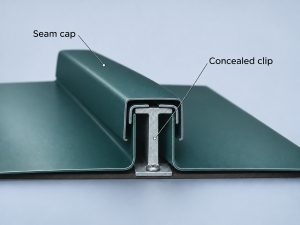
A standing seam roof works as a complete assembly. The panels, attachment method, seams, trim, flashing and supporting roof conditions all have to work together. A ribbed appearance alone does not identify a standing seam system. Many older commercial buildings use exposed-fastener metal panels, while standing seam systems commonly conceal the primary panel attachment beneath the seams.
 Panel Attachment and Thermal Movement
Metal changes dimension as temperatures rise and fall. Standing seam systems account for that movement through system-specific panel and clip details rather than relying on exposed fasteners through the broad panel surface. Some systems use fixed attachment points together with clips that allow controlled movement along the panel length.
The exact attachment design depends on the panel system, roof geometry, supporting structure and project requirements. Long panel runs, roof shape and connection details all matter, which is why the attachment approach should be selected as part of the overall roof design rather than treated as a one-size-fits-all detail.
Seam Profiles and Roof Conditions
Standing seam panels can use different seam profiles and joining methods. Some panels snap together, while others are mechanically seamed after installation. The roof slope, panel profile, seam configuration, supporting deck or framing and manufacturer requirements all affect whether a particular system is appropriate.
For a low-slope commercial roof, suitability should be confirmed for the specific system rather than assumed from the words standing seam alone. D.A. Quality Roofing evaluates the roof geometry and supporting conditions before recommending a panel and attachment approach.
When Standing Seam Replacement Makes Sense
A leaking metal roof does not automatically need to be replaced. If the existing roof remains serviceable, a focused repair or metal roof restoration may be a better first step. Replacement becomes a stronger consideration when keeping the current roof is no longer practical.
Conditions that can lead to a replacement discussion include:
- Widespread deterioration: Corrosion or panel damage affects enough of the roof that retaining the existing system is no longer practical.
- Recurring problems: Leaks or other concerns continue across multiple areas despite previous repair work.
- Damaged roof components: Panels, decking, framing or other supporting conditions require broader work.
- Changes to the building: Additions, new equipment, a different building use or long-term ownership plans change what the roof needs to accomplish.
The recommendation should follow the roof’s condition and your plans for the property. No single symptom or age threshold decides whether replacement is necessary.
What Goes Into a Standing Seam Project
Evaluating the Existing Roof and Building
Before selecting a replacement system, the project should account for the existing roofing, roof geometry, slope, supporting deck or framing, drainage, penetrations, rooftop equipment and access needs. Those conditions help determine whether standing seam fits the building and what preparation will be required.
Preparing the Roof for the New System
Depending on the approved scope, existing roofing may be removed or other preparation may be required before the new metal roof is installed. Damaged decking or supporting materials should be addressed, and the new assembly may include insulation, underlayment or other components required by the selected system and building conditions.
Moisture control also belongs in the planning discussion. Metal roofing can be part of assemblies with very different insulation, ventilation and interior conditions, so condensation risk should be addressed through the overall roof and building design rather than assumed to have one universal solution.
 Installing Panels, Seams and Flashing
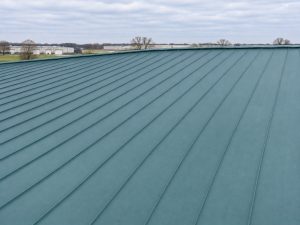
Panels are laid out and secured with the attachment method specified for the system. Seams are closed according to the selected panel profile, and ridges, eaves, rakes, walls, curbs and penetrations receive compatible trim and flashing. These transitions are important because the metal panels and surrounding details need to remain weather-resistant while accommodating the movement expected in the roof system.
Commercial work also needs to be planned around building operations. Roof access, deliveries, equipment, parking, occupied areas and weather interruptions can affect the sequence. Safety remains part of every stage because protecting your people, property and the roofing crew matters.
Standing Seam Metal Roofing for Findlay Businesses
D.A. Quality Roofing is based in Berne, Indiana, and serves commercial and industrial properties in Indiana and Ohio, including Findlay. We value honest advice, clear communication and taking responsibility for our workmanship. If your existing roof needs attention but not a full replacement, our roof repairs service may be the better starting point. You can also learn more about replacement options on our standing seam metal roofing page.
To discuss a standing seam roof for your Findlay building, call our Ohio line at 419-276-7073.
Frequently Asked Questions
How can I tell if my building already has a standing seam roof?
Raised seams are a common feature, and many standing seam systems do not use exposed fasteners through the broad panel surface. A ribbed appearance alone is not enough to identify the system.
Can standing seam be installed on a low-slope commercial roof?
Some standing seam systems are designed for low-slope applications, but suitability depends on the specific panel system, seam configuration, roof geometry and supporting conditions.
Do I need to pick a panel system before calling?
No. Share what you know about the current roof, building use and your plans for the property. System and attachment options can be discussed after the roof conditions are evaluated.
Can a metal roof be repaired or restored instead of replaced?
Sometimes. Focused repair may fit a limited problem, while restoration may be appropriate when the existing metal roof remains a suitable foundation. Replacement is considered when retaining the current roof is no longer practical.